
Are you a Pakistani animal lover ready to bring a new companion home? The decision between adopting and buying is the first step in a journey of responsible ownership. In Pakistan, where pet culture is growing alongside pressing animal welfare concerns, making an informed choice has never been more critical. This guide cuts through the confusion, offering a clear, local perspective on adoption and ethical buying to help you welcome your new family member with confidence and compassion.
Understanding Your Options: Adoption vs. Buying
In Pakistan, the path to pet ownership typically follows one of two routes: adoption from a shelter or rescue, or purchasing from a breeder or seller. Each path has distinct implications for you, the animal, and the broader community.
Pet Adoption in Pakistan means giving a permanent home to an animal from a shelter, rescue organization, or an individual rehoming a pet. These animals often come from situations of abandonment, stray populations, or owners who can no longer care for them.
Buying a Pet involves purchasing an animal, usually a specific breed, from a breeder, pet shop, or through a private sale.
The Case for Adoption: Giving a Second Chance
Adoption is a powerful act of compassion with immense benefits:
- Saving a Life Directly: You free up crucial space and resources in often-overcrowded shelters, allowing them to rescue another animal in need. You directly change a life story from one of survival to one of love.
- Combating the Stray Crisis: Pakistan has a significant stray animal population. By adopting, you reduce demand for breeding and contribute to a more sustainable solution.
- Financial Accessibility: Adoption fees (typically ranging from PKR 2,000 to 10,000) are almost always significantly lower than purchasing a bred puppy or kitten (which can start from PKR 25,000 and soar into lakhs for specific breeds). This fee usually covers initial veterinary care like deworming and first vaccinations.
- Known Adult Personality: With adult animals, what you see is what you get. Their size, temperament, and personality are already established, reducing uncertainty about how they will fit into your home.
- Promoting “Desi” Breeds: Many adopted animals are local “desi” breeds (like the Pakistan Gull Terrier or local cats) who are often naturally more resilient to the local climate and have fewer genetic health issues than some purebreds.
The Reality of Buying: Navigating the Ethical Path
Choosing to buy a specific breed is not inherently wrong, but it must be done with extreme diligence to avoid supporting cruelty.
- Predictability in Traits: Reputable breeders aim for consistency in size, appearance, and temperament, which can be important for families with specific needs (e.g., allergy-friendly coats, known behavior with children).
- Health Screening: Ethical breeders will conduct and provide proof of genetic health screenings for the parent animals, reducing the risk of inherited diseases.
- Early Socialization: Puppies and kittens from a good breeder are raised in a home environment, handled regularly, and introduced to various household stimuli during their critical early weeks.
⚠️ The Critical Warning: Puppy Mills and Unethical Sellers
The dark side of the pet trade in Pakistan is the prevalence of “puppy mills”—facilities that prioritize profit over animal welfare. Animals are kept in poor conditions, bred repeatedly, and often suffer from behavioral and health problems. Pet shops often source from these mills. Red flags include: multiple litters available at once, unwillingness to let you see the mother or breeding facility, no health records, and prices that seem “too good to be true.”
Finding Ethical Sources: A Pakistani Pet Seeker’s Guide
How to Find a Reputable Breeder
- Ask for Proof: Demand health clearances for both parents, vaccination records for the litter, and a clean, home-based environment visit.
- Ask Questions: A good breeder will ask you as many questions as you ask them. They want to ensure their animals go to suitable, lifelong homes.
- Check Reputation: Seek referrals from veterinary clinics or established kennel clubs. A trustworthy breeder often has a waiting list.
Where to Adopt in Pakistan – A City-by-City Resource
- Karachi: A Friend’s (AFA), Aanimal Rescue Edhi, The Guardian Foundation, Tailwaggers
- Lahore: Pakistan Animal Welfare Society (PAWS), Lahore Animal Rescue, Pehchaan Rescue Shelter
- Islamabad/Rawalpindi: CDRS Benji Project, Footprints, Islamabad Animal Rescue
- Nationwide & Online Platforms: Pet.gov.pk, Pakistan Pet Forums on Facebook, and community groups like LivingSoulsPK, which connect responsible owners.
Key Considerations for Your Pakistani Household
Before deciding, take this self-assessment:
- Lifestyle & Space: Do you have an active lifestyle for a high-energy dog, or a calm apartment for a cat or older pet? Does your housing society allow pets?
- Financial Responsibility: Beyond the initial cost, factor in high-quality food (PKR 3,000-8,000/month), routine vet care, emergencies (which can cost thousands), grooming, and accessories.
- Time & Commitment: Dogs, especially puppies, require significant time for training and exercise. Can you provide this for the next 10-15 years?
- Family Consensus: Is everyone in the household on board and free of allergies?
The Legal & Moral Landscape in Pakistan
While national animal welfare laws are developing, the Prevention of Cruelty to Animals Act exists. As a responsible owner, your moral duty includes:
- Microchipping for identification.
- Sterilization/Spaying to prevent unwanted litters.
- Providing basic welfare: Clean water, nutritious food, shelter, and veterinary care.
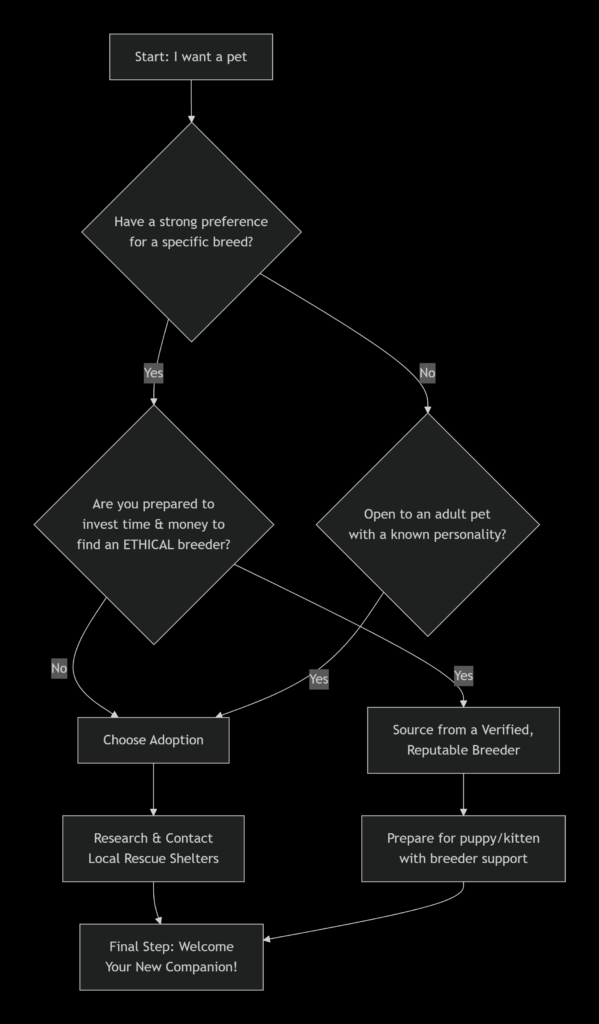
Your Decision Guide: A Simple Flowchart
To visualize your path, follow this decision flowchart:
Conclusion: The Heart of the Matter
The most responsible pet you can bring home is the one you can commit to for its entire life, through illness, changes, and old age. Whether you find your perfect match in the playful eyes of a shelter pup or through the careful planning with an ethical breeder, the ultimate goal is a lifelong bond built on love and responsibility.
Your journey towards responsible pet ownership starts with a single, informed choice. Explore the pets looking for a second chance in your local community or learn more about connecting with trusted sources.